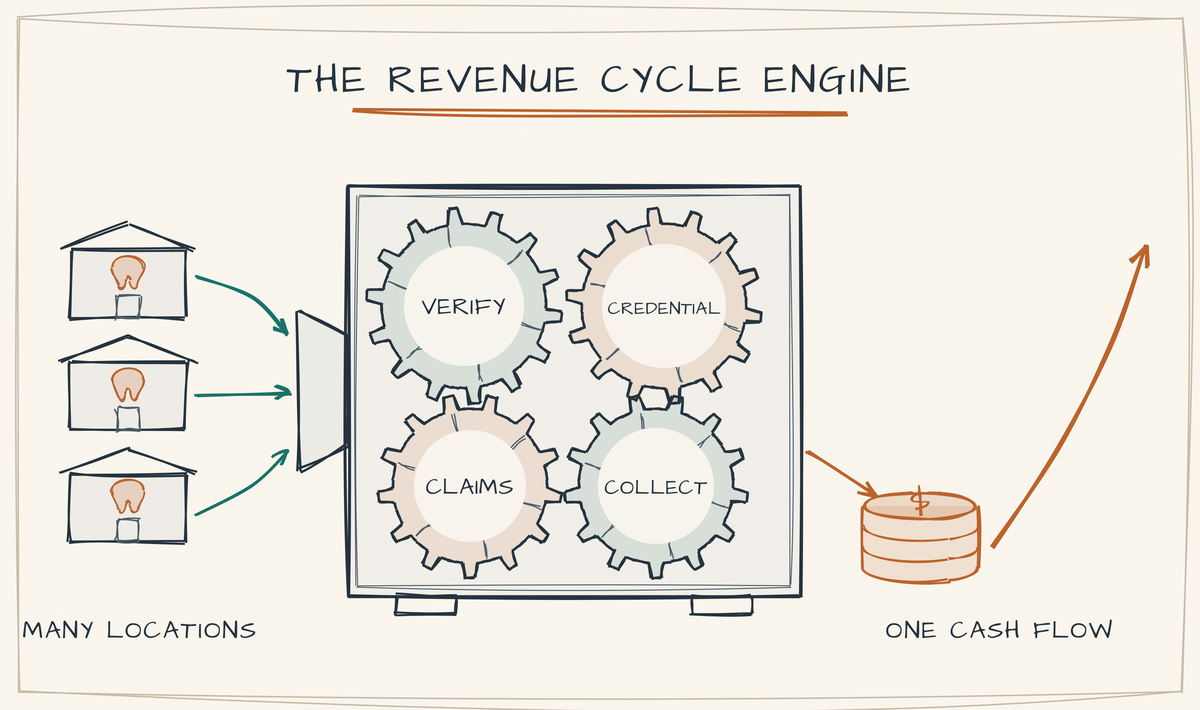
Every DSO leader eventually knows: the best dentists stay when they own something that matters to them. For the last decade, the answer has been the joint venture or “sub-DSO.” The partner doctor owns a minority share of a subsidiary DSO dedicated to his or her practice, and shares in its profits. It works. The problem is what happens when you run it fifty times.
At volume, the sub-DSO approach proliferates tax IDs, K-1s, operating agreements, service agreement suites, governance, minority rights, bank accounts, state and local filings and licenses. Lenders push to limit EBITDA credit. Closings slow down. Legal spend compounds. Accounting becomes a nightmare. And diligence in the next recap turns into an archaeology project.
We now know there’s a better way: tracker equity. In its simplest form, it replicates a sub-DSO; but instead of creating a separate entity and replicating the entirety of a DSO infrastructure for every location, the existing DSO simply declares a new class of units. Once the initial infrastructure is in place, creating a new sub-DSO becomes as easy as granting a profits interest: a single piece of paper.
So why now? It’s not new. GM pioneered it in the mid-1980s, and it became a minor fad in the lead up to the dot-com bubble, with companies like Disney and Staples using it to separately track their online businesses. Since the bubble burst in 2000, though, it’s been about as common as a good season by the Cleveland Browns: with low enough expectations, you might find an example or two. But ultimately, what first made the tool popular—enabling companies to claim higher valuations on specialty subsidiaries without spinning them out—lost its luster.
But for DSOs, tracker equity solves an entirely different, and newly emphasized, problem: how to improve integration and organic growth, in the aftermath of years of aggressive M&A. Historic shifts in capital allocation are forcing innovation and differentiation in ways not seen for decades. New money is hunting for differentiation in integration and organic growth. Because tracker equity can unlock a cascade of efficiency gains, it is imperative that it be presented to CEOs and Boards. While it is not the right tool for every situation, the conversation itself can be useful as a way to focus management to think about how they will present a differentiated story not only to future investors, but also to regulators.
Because the next wave of innovation is already here, and much of it will flow through the architecture of tracker equity. While sub-DSOs were always best suited for location-specific economics, tracker equity can be far more flexible. It can track differentiated specialties (e.g., general dentistry vs. endodontics), business lines (e.g., med spas, or nutrition), and more. For the next generation of associates looking to become partners, tracker equity affords unparalleled flexibility.
Tracker equity will not fit every DSO. But as the most promising structural innovation in the sector today, tracker equity must at least be in the discussion with DSO leaders at every scale.

Share this post