Sponsored Content: Solmetex
Adhering to the CDCs guidance on infection control and prevention amid the pandemic includes properly maintaining vacuum lines.
In todays group practice setting, especially amid fears of COVID-19, its critical for group practices to maintain infection prevention standards. This includes cleaning vacuum lines daily. In all times (not just in times of COVID), the Center for Disease Control and Prevention (CDC) states that suction lines should be cleaned and disinfected daily to remove blood and debris with a solution compatible with the amalgam separator and evacuation system. Cleaning high volume suction tubing at the end of the day is important since debris can accumulate and clog vacuum line. Daily use of an evacuation cleaner should be used as a shock treatment to keep the system running effectively.
Indeed, the CDC and Prevention deemed the topic important enough to address in its Interim Infection Prevention and Control Guidance for Dental Settings During the Coronavirus Disease 2019 (COVID-19) Pandemic. Per the CDC in its Equipment Considerations section: Air compressor, vacuum and suction lines, radiography equipment, high-tech equipment, amalgam separators, and other dental equipment: Follow protocol for storage and recommended maintenance per manufacturer IFU.
But how can dental group practices know they are doing things right? The following are three best practices that dental group practices should adhere to when it comes to proper vacuum line cleaning.
- Offices that choose to use a microbial vacuum line product are typical safer, then chemically based concentrations to clean their vacuum lines. These formulations are organic and do not contain any harmful compounds that would be harmful to the patient, dental professional or the environment. Enzymatic formulations remain in the vacuum lines until the waste is digested and not simply just flushed through leaving bits of debris behind adhering to the walls of the vacuum line.
- Offices clean their vacuum lines daily and after every surgical procedure with a line cleaner compatible with their amalgam separator and wet or dry vacuum system.
- In compliance with the EPA Dental Rule on the proper handling of amalgam waste in the dental practices, practices must use a vacuum line cleaner with a neutral pH between 6 and 8.
For more information on the CDCs guidelines, visit: www.cdc.gov/coronavirus/2019-ncov/hcp/dental-settings.html.
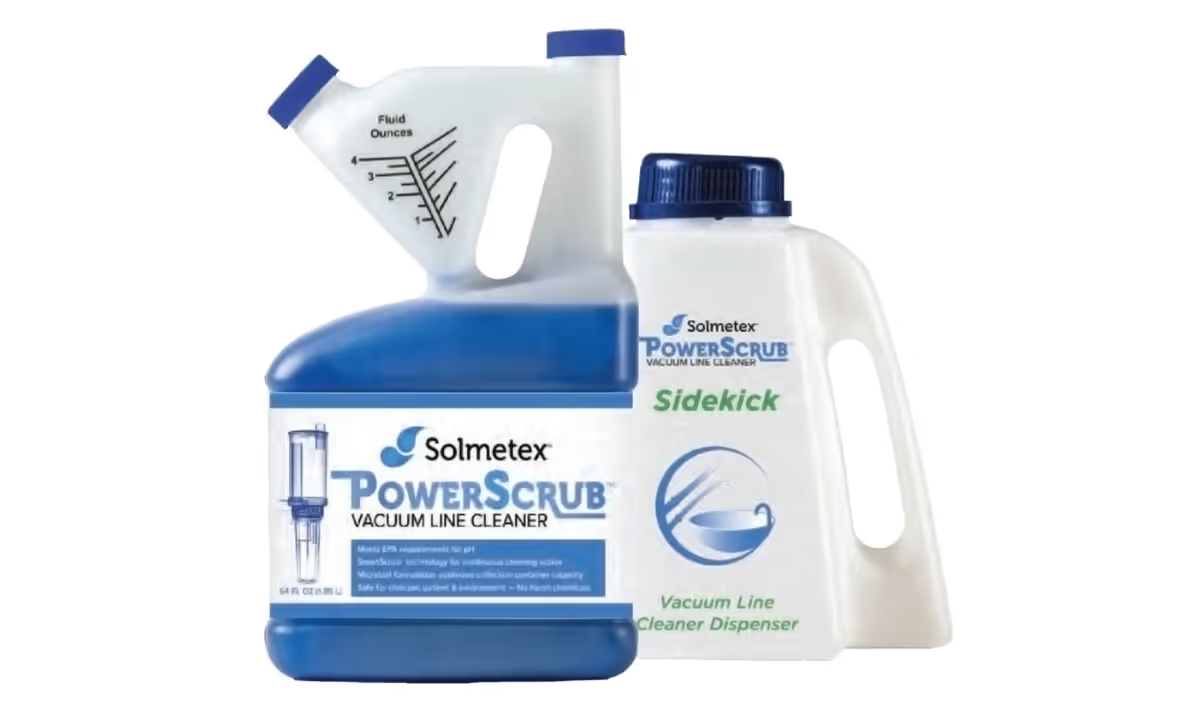
View the Solmetex Powerscrub here: https://solmetex.com/powerscrub.
Common misconceptions with cleaning vacuum lines
1. You only need to clean your vacuum lines once a week.
2. Practices should not use bleach (sodium hypochlorite) to clean lines, this chemical can corrode metal parts in the system.
3. Practices should not use foam cleaners as they leave a residue which can lead to lower suction flow and eventual vacuum pump failure.

Share this post