At press time, there was little certainty around the long-term impact of Coronavirus on the country, let alone the dental industry. Would we be worse off in May? If so, how bad would it get before wed see improvement?
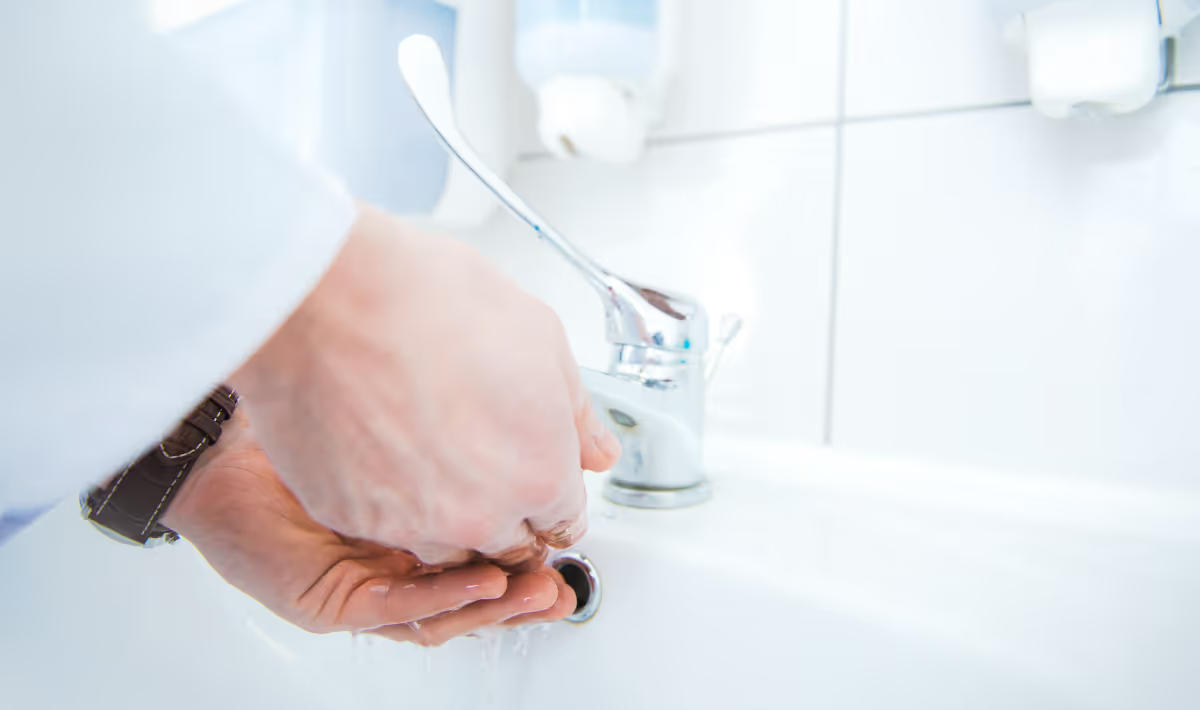
In times of uncertainty, we tend to pay closer attention to research and common sense; as so many clinical and infectious disease experts warn, doctors and dental professionals must follow infection control protocols intended to keep them and their patients safe.
Even in non-pandemic times, however, dental professionals face constant exposure to microorganisms from dental unit waterlines and bioaerosols, which are generated by dynamic dental instruments, according to Leann Keefer, RDH, MSM, director, clinical services & education, Crosstex International, now a proud member of HuFriedyGroup. Splash, splatter and submicron aerosols are a source of potential infection. And, because submicron particles are known to stay airborne for up to 30 minutes following an ultrasonic scaling procedure, the risk does not end once the procedure is over or the patient leaves the operatory.
Its imperative for the dental team to wear face masks, she says. The smaller the size (of particles generated by aerosol and splatter), the greater the potential it will be inhaled and penetrate and lodge in the lungs, which is thought to carry the greatest potential for transmitting infections. Additionally, because these submicron particles stay airborne for extended periods, dental clinicians and team members must opt to don/wear, at a minimum, a Level 1 mask between patients when they are turning/cleaning the treatment room.
In fact, as dental team members are tasked with a growing list of responsibilities, it is more important than ever before that they follow recommended safety standards. Hygienists are a prime example. Indeed, many hygienists today are a significant part of the dental team, according to Jennifer Rush, RDH, BSDH, director of dental hygiene, DecisionOne Dental Partners. At DecisionOne Dental Partners we look at the hygienist not just as a team member, but as a clinician, she says. Our patients see more of their hygienists than any other healthcare provider. In fact, many hygienists today are more involved in treatment plans and post-operative procedures, she adds. As such, hygienists at DecisionOne are encouraged to be role models in infection control and adhering to safety protocols. All team members, including administrative personnel, receive in-person OSHA/HIPAA training and online webinar training, and infection prevention quality control measurements are shared through the use of team member evaluations.
DSOs emphasize infection control throughout their organization, says Andrea Kowalczyk, RDH, BS, lead talent acquisition partner for a leading DSO. Many of our groups employ quality assurance officers who ensure the entire dental team complies with OSHA guidelines, she says. Since those guidelines are always evolving, we rely on these officers to keep us abreast of important changes. Our hygiene trainers and mentors, as well as other professionals, ensure all of our hygienists follow clinical guidelines in order to provide great and safe care.
My hope is that, as you are reading this, the worst of Coronavirus has passed. And that dental professionals continue to show their patients exactly what safe dental care should look like.

Share this post