Sponsored: InsideDesk
The State of Dental
As we head into 2023, DSOs are quickly approaching the crossroads of a perfect storm formed by COVID, The Great Resignation, and a looming recession. How groups handle the next 12-18 months will, in large, determine who comes out on top, and who is swallowed up. The economics driving this shift is due in part to rising inflation and the cost to borrow. Debt is becoming more expensive and riskier for DSOs to continue the explosive growth theyve experienced over the previous 18 months. A primary vehicle for increasing cash flow has been to add practices to a DSO's portfolio, but as the winds of change blow, a buzz word floating around the DSO space is same store growth.
Recession and Same Store Growth
Same store growth, as it pertains to a dental office, is the primary focus on maximizing efficiencies and increasing cash flow compared to the previous year. There are many aspects of an office to look at to accomplish this: optimizing your supply procurement, utilizing AI to diagnose treatment more often and accurately, and converting more patient calls to appointments. While all aspects of an office should be looked over with a fine-tooth comb, for most offices revenue cycle optimization is the largest source of untapped cash flow.
Importance of RCM
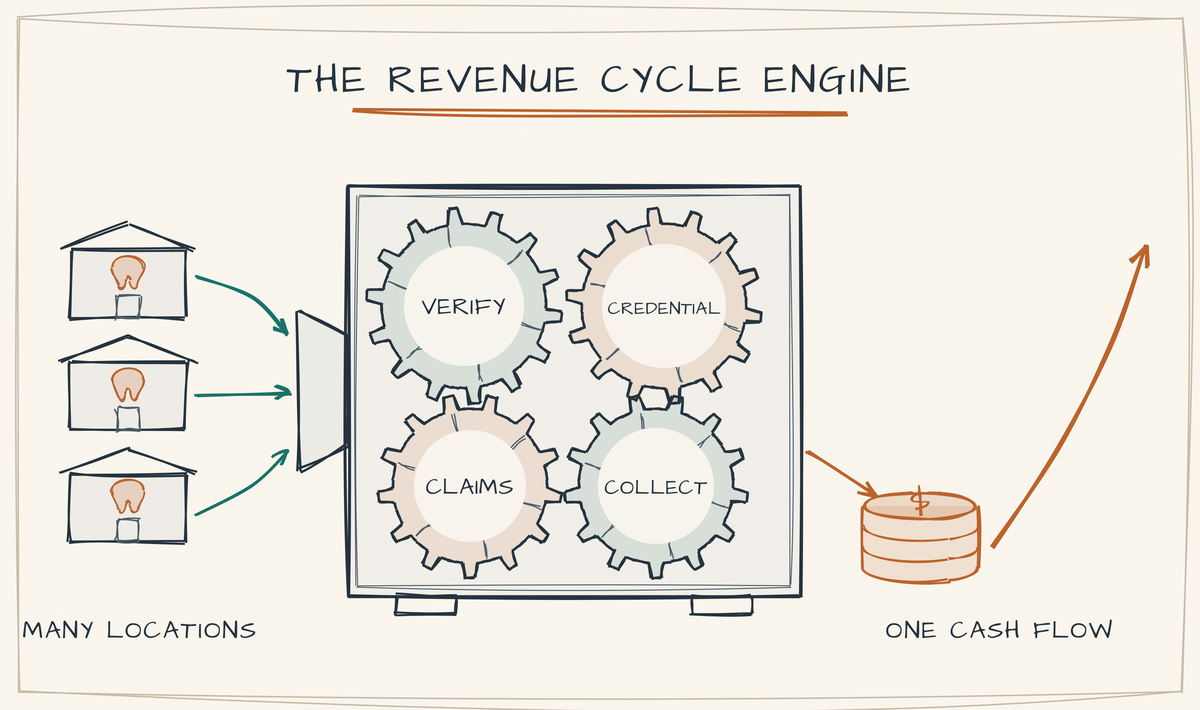
Revenue Cycle Management, RCM, has gained traction from a buzz word to a realized crucial function at the office and DSO level. Anywhere from 60-90% of an offices patients have some level of dental insurance coverage. This means that most production will not be paid by the patient, but that the office will be submitting a claim for insurance payment. The tracking of claims, payments, and outstanding balances due from insurance or patients is the management of an offices revenue cycle. Unfortunately, this process today is quite manual, time intensive, and difficult to track for a single office. RCM becomes exponentially more difficult when you are dealing with 10 locations, or 50 locations. There are very few tools or reports available within a practices management system that allow for the tracking or working of these claims, and its made especially difficult when multiple systems are used across an organization (i.e. a few offices on Dentrix, Open Dental, or Eaglesoft). When you look at and understand the steps required to manage and follow up on claims, its not surprising that most offices struggle to keep up.
Tools and Solutions
The saying goes, you cant manage what you cant measure. This is what leaders are thinking, and currently are looking for new technology as an answer. There are companies, like InsideDesk, that are turning the tables, and providing RCM data that finance and operation leaders have been looking for. While the analytics and insights are powerful, its only half the solution. InsideDesk also provides a platform to help RCM teams become more effective and efficient, at a time when the cost of labor is at a premium. Automation of tedious tasks like EOB collection and claim statusing allow team members to work more claims per day. The daily guided claims list prevents time wasted from printing out AR reports or creating cumbersome excel sheets. These tools allow offices to increase cash flow, and senior leaders to track progress at a time when same store growth is becoming top of mind for all.

Share this post