How a system for new patient acquisition could boost your bottom line.
In dental organizations, growing revenue and expanding locations depends on a companys bottom line. Once you have covered overhead costs (such as doctors salaries and supply costs), then each new patient that a practice gets to come inside their door falls within the bottom line. For this reason, dental organizations should always be focused on driving new patients.
The following are actionable steps to market to new patients now and prep for the future of your practices patient acquisition.
Revenue and marketing
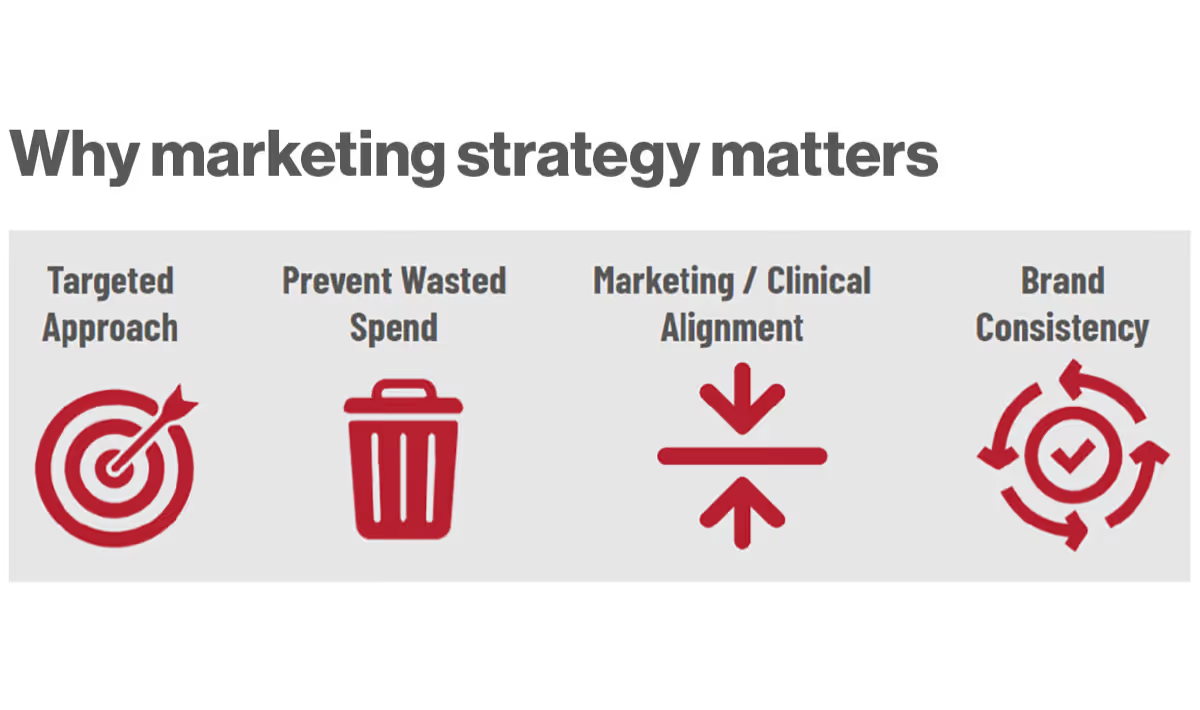
One way a company can increase its revenue and new patient acquisition is through its marketing campaigns. Margins today in dental are getting tighter by the minute, and dental companies must adapt to this by being more efficient with their marketing budgets. Efficiency in marketing budgets includes changing both a companys messaging and campaign strategies to better target the ideal patient or avatar, which is specific to the practices clinical capabilities.
All dental organizations are in the marketing business, and therefore must consider marketing goals. Sometimes, a practice may address advertising responsibilities by hiring a marketing vendor. If your organization doesnt have a vendor or is struggling to know if their vendor is right, DEO has a vendor checklist that organizations can review before making either a change or decision.
Creating marketing campaigns and enticing new patients starts with an understanding of the foundations of successful marketing. DEOs Foundations of Marketing include an understanding of an organizations ideal customer, having a goal for new patients that is tied to the revenue and profitability for each practice every month, establishing a marketing budget, and understanding KPIs that need to be in place to demonstrate that a company is ready for marketing expenditures (operational KPIs include knowing a practices target patient, knowing call conversion and answer rates, and knowing how patients are getting scheduled including recall rescheduling and treatment coordination).
The Four Ms
It is important to first consider strategy when deciding on a marketing plan. Once a marketing plan has been agreed on amongst the leaders of a company, it is time to create campaigns that appeal to potential new patients. When creating a new campaign, follow the Four Ms of marketing:
1. Market
2. Messaging
3. Measure
4. Medium
The first M, market, determines the ideal audience that a dental organization is trying to attract. Many dental businesses often say that they are a bread and butter dental company, referring to the fact that they advertise to all types of patients and ages, and that they will take anyone in no matter the case. It is more likely, however, that the practice has a type of patient they can best assist with their skillset, or that they may prefer treating. This preferred type of patient, also known as an avatar, is a method for defining and segmenting patient demographics, needs, and preferences. The avatar is the type of patient that a practice specializes in seeing.
Define your practices avatar by asking what patients the company is seeing now, and which patients the team would duplicate if they could. Make sure that the patient demographic chosen matches the clinical capabilities and services of the organization. Consider what insurance an ideal patient is on, where they live, and if the patients are from rural, suburban, or urban communities.
It is critical to understand your avatar so that marketing messaging is clearly defined. For example, if a customer does not know the avatar, they might seek emergency services or be an adult walking into a pediatric dental practice. For this reason, it is important for marketing leaders to have a clear understanding of your avatar to properly target new patients. An organizations avatar also determines the medium and messaging that they will use. When you decide on a specific avatar, it allows the whole team to understand and cater to who is coming through the practices door.
Once an avatar is clearly defined and understood, the second M, messaging, should be tailored toward these specific clients. In advertisements, highlight problems your avatar might be facing and solutions your company offers. Then, clearly define what you want a potential customer to do with an action statement, such as click here to call, book now, watch this video, or fill out this form. Craft compelling and enticing messages to attract potential patients.
Once a practice is clear on their message, it is time to work through the third M of marketing, the medium, also known as the channels youll deliver the message on. Identify where the organization is planning to deliver the message. This can include social media, digital, on the website, paid ads, flyers, banners, billboards, direct mail, community events, and more. It is important when creating a marketing campaign to be clear about who the practice serves and use that to decide where exactly to deliver that message and how. As an example, if you are building a de novo practice, getting out into the community is important. If your practice has an older demographic, print and media marketing are very valuable. It often takes 7 to 10 touches to convert an individual to becoming a patient. The more a practice diversifies its marketing channel, the better, as it helps people connect with your business and get those touchpoints faster.
The fourth M, measure, is a critical step so that an organization can understand its progress. Simplify the process of measuring marketing progress by asking: did our patient numbers go up, and if so, by how much? Measure this number before beginning a new marketing campaign, and after. Ask what the goal of the campaign was, and what the budget was. Track, measure, and monitor any measurable outcomes, and use these numbers to understand the organizations baseline and to determine where to divert budget dollars.
Once you have a thorough understanding of the Four Ms of marketing, begin implementing your own marketing campaigns tailored to your organizations avatar. This includes working with office managers to define each practices patient avatar, partnering with a marketing vendor to identify appropriate messaging and medium, deciding a marketing lead/vendor, and measuring reviews or results of the campaign. Through these steps, dental practices can be on their way to increase revenue through new patient acquisition.

Share this post