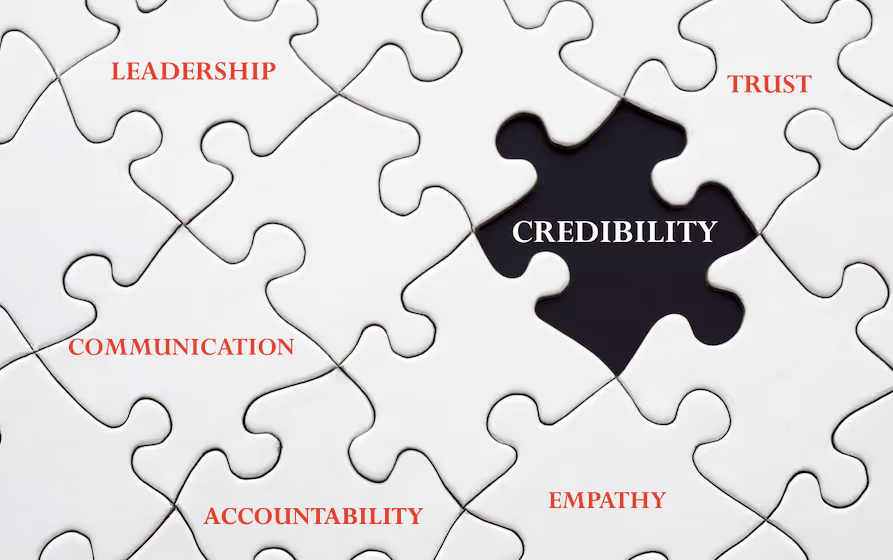
Credibility is the quality of being trusted and believed in. One of the flaws of many leaders is they lack credibility. Credibility is created through authentic dialogue and clear two-way communication. Most leaders avoid any form of feedback from their people and won’t permit their leadership performance to be assessed by their people. They resist feedback that fosters open dialogue and communication. Most leaders’ communications are a one-way street. They are commander-in-chief rather than the leader of a team. But if credibility requires open dialogue and direct communication (that are the taproots of credibility), and without credibility leadership is impotent, why do leaders avoid dialoguing and communicating with their people? Why don’t leaders want to hear directly from their executives and employees? Why are leaders closed to what others have to say or suggest? Why do leaders feel more comfortable directing that dialoguing? Why don’t leaders really listen? One element that may explain why leaders don’t listen is they “already know.” They already know who the other person is, they know what to do, much better than employees do, they have their agenda which supersedes everything and everybody else. They hold themselves as more important than everyone else is to dutifully line up with the leader’s intentions. Equally as important, leaders don’t want to hear where they are performing poorly as a leader. If they did listen, they would have to change. They would have to spend their super-valuable time dealing with other people. Ultimately, the reason they don’t listen is a product that they get to be “right.” Right about the industry, the strategy, the tactics, the directives, the requests, the way others should do their job. A leader’s credibility doesn’t come from not always being right, but from a leader’s openness to being wrong. As Steve Jobs once said: “I don’t really care about being right, I care about success. I don’t mind being wrong, and I’ll admit I’m wrong a lot. It really doesn’t matter to me too much. What matters is that we do the right thing.” The only way for a leader to find out about "being wrong," is to have an open dialogue and straightforward communication with their executives and employees, and then be courageous enough to hear what they say. And if the leader wants to build credibility, they make a legitimate effort to change what others perceive they are doing poorly or wrong. Without an open dialogue and authentic communication, without credibility, a leader doesn’t generate relationships of trust, affinity, kinship or loyalty. The moral of the story is that without credibility, leaders have no power.

Share this post
You might also like


3 Ways Automation and AI Help Dental Owners Reduce Admin Overload
